
Your keyfob lives a rough life. It sits in your pocket alongside loose change, gets tossed onto dashboards, brushed against belt buckles, and gripped with sweaty hands every single day. For most men, it’s the most-handled leather piece they own — yet it’s almost always the most neglected. If you drive a Fortuner, a Alphard, or something with a German badge, chances are your key deserves better than the treatment it’s getting. Here’s how to clean your leather keyfob properly, without turning a beautiful piece of craftsmanship into a cracked, faded disappointment.
Why Does a Leather Keyfob Need Special Care at All?
Leather isn’t plastic. It’s a natural material that breathes, absorbs, and reacts to everything it touches — oils from your skin, humidity from Jakarta’s air, the residue from hand sanitiser, even the dye that bleeds off the inside of dark trouser pockets. Over time, these elements accumulate and break down the surface of the leather if left unaddressed. The fibers dry out, the finish dulls, and the material starts to crack from the inside. A quality vegetable-tanned leather keyfob, properly maintained, should last a decade or longer and develop a deep, personal patina along the way. Neglected? It starts looking tired within a year. Cleaning isn’t just cosmetic — it’s preservation.
What Supplies Do I Actually Need?
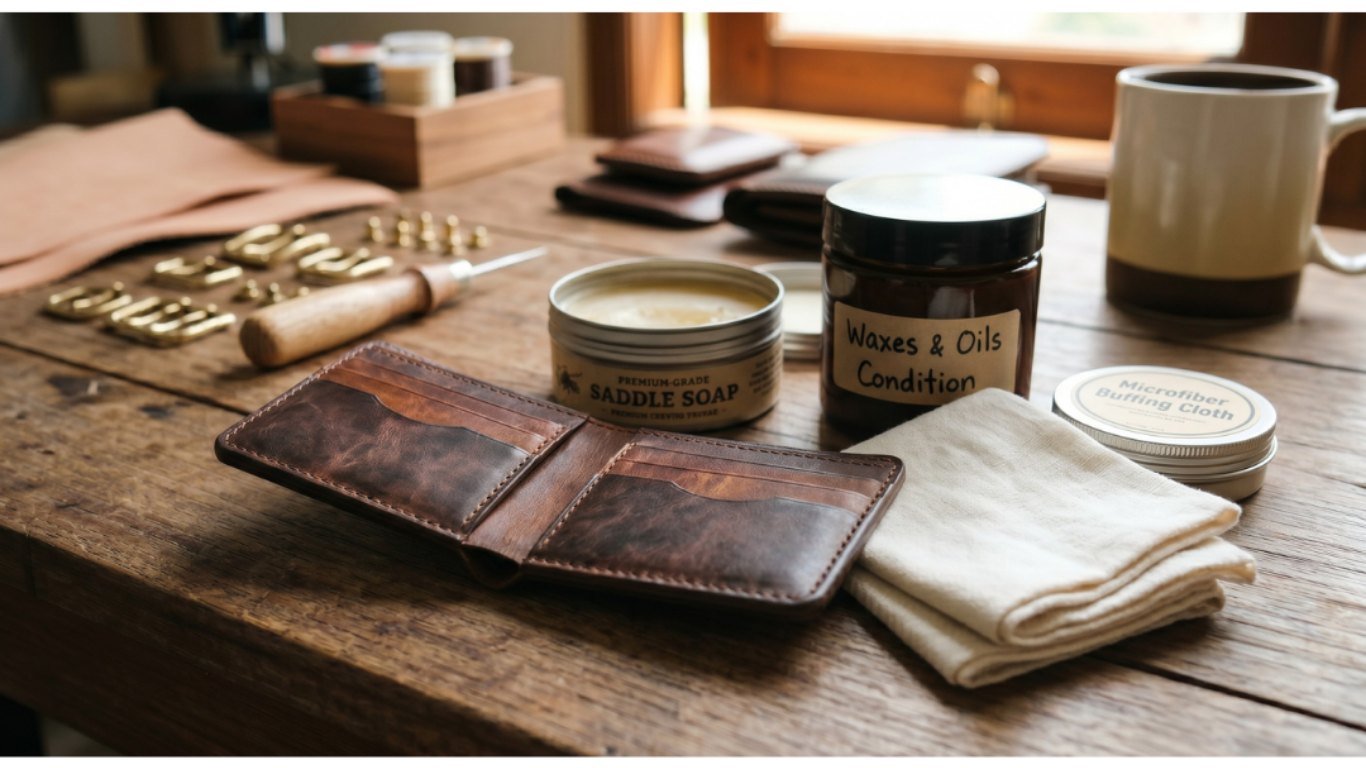
Less is more here, and that’s not just a saying — it’s a rule. You don’t need a cabinet full of products. Start with a soft, lint-free cloth — an old cotton t-shirt cut into small squares works perfectly. You’ll need a mild, pH-neutral soap; saddle soap is the traditional choice and genuinely excellent, but a small amount of unscented castile soap also works well. After cleaning, you’ll want a leather conditioner — look for one based on natural waxes or oils like beeswax or neatsfoot oil. Finally, keep a second dry cloth ready for buffing. That’s it. Avoid anything with alcohol, acetone, baby wipes (most contain fragrance and alcohol derivatives), or household cleaners. These strip the natural oils from the leather faster than you can say “ruined keyfob.”
How Do I Clean It Step by Step?
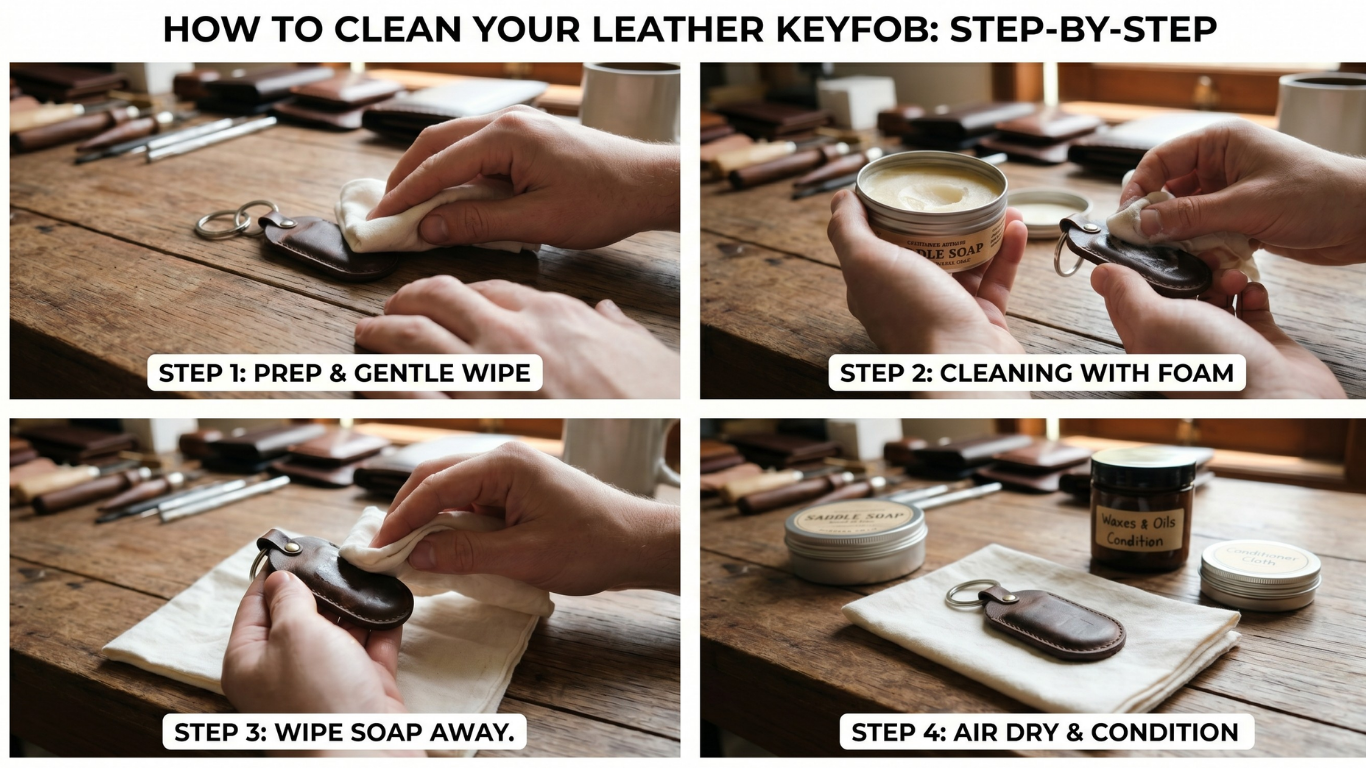
Start by removing the keyfob from your keyring entirely if possible — working on it separately gives you full control and avoids metal hardware scratching the surface. Step one: Wipe the entire surface gently with a barely damp cloth to lift surface dust and loose grime. Use almost no pressure. Step two: Take a tiny amount of saddle soap — less than a pea-sized amount — and work it into a light foam on your cloth, not directly onto the leather. Apply in small, circular motions across the surface. You’re not scrubbing; you’re coaxing the dirt out. Step three: Wipe away the soap residue with a clean, slightly damp cloth. Make sure no soap remains — dried soap residue can actually attract more dirt and leave a chalky film. Step four: Allow the keyfob to air dry fully in a shaded area. Never use a hairdryer or place it near direct sunlight to speed up the process. Heat is the enemy of leather fiber integrity.
What About Conditioning — Is It Really Necessary?
Absolutely, and this step is where most people stop too early. Think of conditioning like moisturising — your leather keyfob loses natural oils every time you clean it or expose it to harsh conditions. Without replenishment, the fibers become brittle. A good conditioner restores suppleness, deepens the colour slightly, and forms a light protective barrier against future moisture and staining. Apply a very small amount of conditioner to a cloth — not directly to the leather — and work it in gently using circular motions. Let it absorb for five to ten minutes, then buff lightly with a dry cloth. The leather should feel smooth and slightly nourished, not greasy. If it feels tacky or looks overly shiny, you’ve used too much. Wipe off the excess. For a keyfob used daily in a tropical climate like Jakarta or Surabaya, conditioning once every four to six weeks is a reasonable rhythm.
Are There Things I Should Never Do to My Keyfob?
Yes, and this matters more than most people realise. Never submerge it in water — even brief soaking can cause vegetable-tanned leather to warp, stiffen, and lose its shape permanently. Never use baby wipes or wet wipes, even the “gentle” ones — they almost universally contain chemicals that degrade leather finishes over time. Never dry it with heat — no direct sunlight, no hairdryer, no leaving it on top of a hot car dashboard. Never use shoe polish as a substitute for proper leather conditioner — they’re formulated differently and can clog the pores of finer leathers. And if you ever notice a stain, deal with it quickly rather than letting it set. Fresh stains are dramatically easier to address than ones that have had time to bond with the leather’s surface. Acting fast is the difference between a minor inconvenience and a permanent mark.
How Do I Know If My Keyfob Is Actually High Quality Leather?
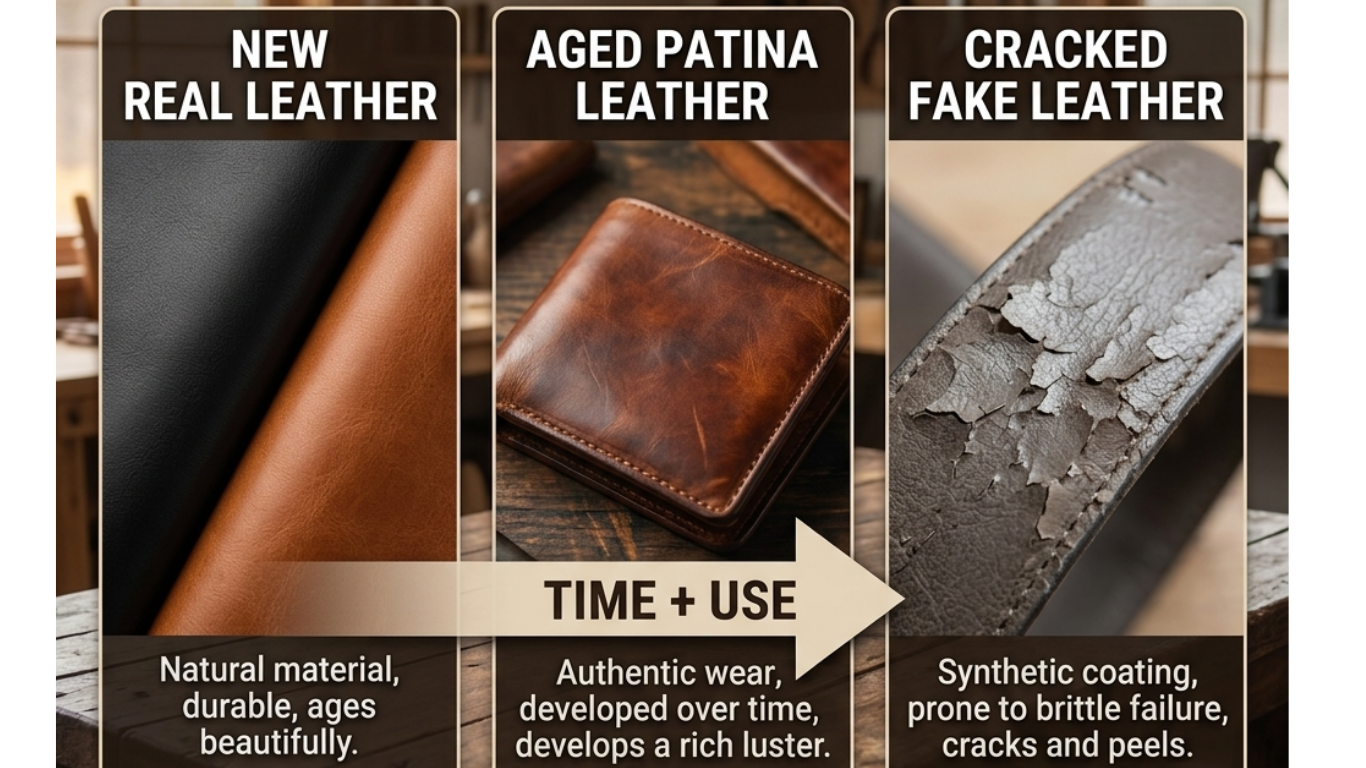
This is a question worth asking before you invest time in care. The easiest test: press your thumb firmly into the surface for a few seconds, then release. On genuine full-grain or vegetable-tanned leather, you’ll see a slight colour change or impression that slowly fades — this is the leather responding to warmth and pressure, a sign of live, reactive material. Quality leather also has a distinct, clean smell — earthy, slightly nutty, never chemical or plasticky. Over time, it develops unique marks from use: a subtle sheen in high-contact areas, a deepening of colour, a softening of the edges. These aren’t signs of wear — they’re signs of character. This is what craftsmen call patina, and it’s what separates a truly premium piece from something that simply looks good for the first six months and then deteriorates. We select our hides specifically for their ability to age this way.
How Often Should I Be Doing This Whole Process?
For a keyfob used daily — which is nearly everyone — a full clean and condition cycle every four to six weeks is ideal in a tropical climate. Between those sessions, a quick wipe-down with a dry cloth every few days takes less than thirty seconds and removes the surface oils and dust that accumulate with daily handling. If you’ve been caught in unexpected rain or exposed the keyfob to an unusual amount of moisture, do a light clean and condition within the next day or two rather than waiting for your regular cycle. Consistency is everything with leather care. It’s not about dramatic rescue operations — it’s about small, regular habits that keep the material in peak condition month after month, year after year.
A leather keyfob isn’t just a functional object. Every time you reach for your keys, it’s the first thing your hand touches — a small but constant reminder of your taste and your standards. Treat it accordingly.
